Birding is a rewarding year-round activity in Las Cruces, but it’s especially enjoyable from fall through spring. During these cooler months, a greater variety of species can be observed, and the bare trees make them easier to spot and identify.
Southern New Mexico has a multitude of birding hotspots, as well as an active chapter of the Audubon Society, the Mesilla Valley Audubon Society, ready to help beginning birders distinguish a finch from a sparrow.
What Does the Local Chapter Do?
The Mesilla Valley Audubon Society holds monthly meetings, regular bird walks, field trips, and other activities, such as the annual Christmas Bird Count.
Wild Birds Unlimited at 2001 E. Lohman is another excellent resource for birders.
BIRDING NECESSITIES
Before heading out to explore Southern New Mexico’s birding hotspots, it helps to be prepared. Having the right gear not only makes identification easier but also enhances the overall experience. A few basic tools can turn an ordinary walk into a productive birding trip.
- Binoculars
- Bird guide
- Notepad to record sightings or access to the free eBird app on your phone
- Water and snacks
- (Optional) A camera with a telephoto lens to photograph birds and identify them later
FAVORITE BIRDING SPOTS TO EXPLORE
Las Cruces Dam Flood Control Area
There are miles of trails, benches, and a waterfowl viewing blind in the area east of the Las Cruces Dam. There are numerous access points, including at Sagecrest Park, which is an easy walk to the duck blind. See water birds at the wetlands and a variety of species in the rest of the dam area, including Gambel’s quail, phyrroloxia (desert cardinal), sparrow species, roadrunners, and much more.
Location: Sagecrest Park, 601 Roadrunner Parkway

Mesilla Valley Bosque State Park
Located along the Rio Grande, Mesilla Valley Bosque State Park features riparian areas and wetland habitats that attract a wide variety of species, including verdin, pyrrhuloxia, phainopepla, and numerous waterfowl in winter. It’s an excellent year-round destination for birders who want easy access from the city.
Location: 5000 Calle del Norte, Mesilla
Dripping Springs National Recreation Area
On the west side of the Organ Mountains, this area offers pinyon-juniper and oak woodland habitats ideal for desert and mountain species. Look for black-throated and many other species of sparrows, Scott’s orioles, canyon towhees, and occasionally scaled quail along the trails. Hummingbirds are common in summer. Look for grosbeaks, thrushes, kites, hawks, thrashers, and phainopeplas, handsome black birds with red eyes.
Location: 15000 Dripping Springs Road
Leasburg Dam State Park
Set along the Rio Grande, Leasburg Dam State Park supports over 250 bird species year-round. Riparian woodland and desert scrub habitats attract migrants such as warblers and grosbeaks, as well as resident birds like the cactus wren and greater roadrunner.
Spot waterbirds such as Wilson’s snipes and American pipits in winter. Along the river trail, you can find rock wrens, verdins, thrashers, towhees, and ladder-backed woodpeckers. Among the 166 species recorded here are also pine siskins, broad-tailed hummingbirds, Woodhouse’s scrub-jays, bluebirds, and cliff swallows.
Location: 12712 State Park Road, Radium Springs
Percha Dam State Park
A premier birding spot in the state, Percha Dam State Park on the Rio Grande north of Hatch offers open woodlands, plenty of water, and a river trail. Spot phainopeplas, woodpeckers, vermillion flycatchers, and vireos. The willow and cottonwood habitats provide excellent warbler watching during spring and fall migrations. There is also excellent birding at nearby Caballo and Elephant Butte reservoirs.
Location: Highway 187, Caballo
Bosque del Apache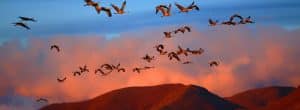
At this world-famous birding destination, birders can see tens of thousands of snow geese and sandhill cranes each winter. Visitors can also find cinnamon teal, northern harriers, and a variety of songbirds depending on the season. This refuge features driving tours and viewing platforms that let you spot many other species drawn to the water, such as now geese, Canada geese, American wigeons, pintails, and white-faced ibis. You might spot a bald or golden eagle, great blue herons, and wood ducks.
Location: 101 NM-1, San Antonio
What Events Does the National Audubon Society Sponsor?
The National Audubon Society sponsors several major citizen-science events each year that invite birders of all experience levels to contribute valuable data.
- Christmas Bird Count: The longest-running citizen-science project in the world, this annual winter bird survey has been conducted since 1900. Participants count birds within designated circles, providing data that helps track population trends over time. This event happens annually from December 14 through January 5.
- Great Backyard Bird Count: Held each February, this global event invites people of all experience levels to count birds in their backyards or local parks and submit their findings online. The data helps scientists monitor bird distribution and abundance.
- Climate Watch: Conducted twice a year, this community science program studies how specific bird species are responding to climate change across North America.
Birding in Southern New Mexico
Southern New Mexico offers an impressive range of birding experiences, from riparian forests along the Rio Grande to desert foothills and mountain canyons. Popular sites such as Mesilla Valley Bosque State Park, Leasburg Dam, and Dripping Springs provide year-round access to resident and migratory species, while larger destinations like Bosque del Apache attract vast flocks of waterfowl and sandhill cranes in winter.
With the right gear, local maps, and a sense of curiosity, birders can enjoy some of the most rewarding avian encounters in the Southwest.
Posted by LasCruces.com