Buying or Selling Antique & Estate Jewelry: Las Cruces Guide
Buying or Selling Antique & Estate Jewelry: Las Cruces Guide
Estate jewelry can be a good buy and a practical way to unlock value from pieces you don’t wear, but only if you authenticate your pieces and price them correctly. In Las Cruces and the Mesilla Valley, a credentialed jeweler can help you confirm hallmarks, test metals, identify gemstones, and explain whether a piece is worth scrap value or collector value.
If you want to buy or sell estate jewelry in Las Cruces, begin by learning how value is determined, how to sort inherited pieces, and which local experts you can trust. Austin’s Fine Jewelry in Las Cruces has more than three decades of experience with estate jewelry, appraisals, and fair trade‑ins, making it a reliable first stop for local buyers and sellers.
What Qualifies as Estate Jewelry, and Is It Always Vintage or Antique?
Estate jewelry is any piece of jewelry that has had a previous owner. It could be a recent purchase you inherited or a true antique ring from generations ago. Estate jewelry is always pre-owned, but it is not always old.
Buying Estate Jewelry
People buy estate jewelry for its distinctive designs, craftsmanship, and value, and they sell it for practical reasons such as settling an estate, downsizing, or changing taste. Also, estate jewelry can offer better value than new pieces, distinctive designs, and vintage or Southwestern styles that are hard to replace.
Selling Estate Jewelry
People sell estate jewelry for reasons such as inheriting pieces they will not wear, changing personal style, or needing to turn jewelry into cash. Market worth is tied to materials, condition, maker, and current buying trends, and not upon age alone.
Estate jewelry includes any pre‑owned piece, from modern designs to heirlooms that are more than a century old. A ring bought five years ago and resold today is technically estate jewelry, even if it looks brand new.
In the trade, antique jewelry typically refers to pieces at least 100 years old, while vintage often describes jewelry roughly 20 to 100 years old, depending on style and era. Not every estate piece has high resale value, because materials, condition, craftsmanship, and the resale market all play a larger role than age alone.
Here’s the simplest way to describe the common categories:
Estate: previously owned, any age.
Vintage: often described as jewelry from roughly 20 to 100 years ago (definitions vary by source and trade usage).
Antique: typically refers to jewelry 100+ years old.
Key point: not all estate pieces are valuable. Condition, materials, originality, and buyer interest matter more than the label.
What Should You Check When Evaluating Estate Jewelry for Purchase or Sale?
When you evaluate estate jewelry for purchase or sale, first check the metal stamps and maker’s marks. Use the checklist below before you buy, or accept an offer.
Hallmarks, maker’s marks, and metal purity
Look for stamps such as 14K, 18K, .925 (sterling), and PT/PLAT, as well as designer signatures or workshop marks that can boost value (ECFR.gov, December 2025).
These can help confirm metal type and sometimes point to origin or quality standards. The Federal Trade Commission’s Jewelry Guides also address how precious metal descriptions and quality marks should be represented in the marketplace.
Gemstones: natural vs treated, and identification essentials
Gemstones should be evaluated for identity (the type of stone), treatments, and condition. Treatments can affect value, and disclosure matters in the jewelry industry (GIA 4CS, February 2014).
Condition and craftsmanship
Check for:
loose prongs, worn settings, or thin shanks
chipped stones or missing side stones
evidence of repairs, resizing, or replacement parts
Next, examine the gemstones and construction. Natural stones, original settings, and solid craftsmanship typically command higher prices, while heavy wear, missing stones, or obvious repairs can reduce value or push a piece into “scrap only” territory.
One practical question is whether repairs are performed in-house; Austin’s is known for handling many repairs in-house, reducing the risk of shipping pieces out.
Provenance and documentation
If you have it, keep:
prior appraisals
receipts
designer paperwork or certificates
Documentation rarely “makes” worth by itself, but it can support credibility and pricing.
Rarity
Unusual period designs, limited production, and distinctive gemstones can increase demand, but only if buyers are actively seeking that style.
Takeaway: A quick visual inspection helps, but verification is what protects your money (as a buyer) and your payout (as a seller).
How Is the Value of Estate Jewelry Determined?
Estate jewelry value usually falls into three practical buckets:
Value type
What it means
When it matters most
Scrap value
Metal value is mainly based on type + weight (gold, silver, platinum)
Broken pieces, out-of-style items, or damaged settings
Resale/collector value
What a buyer will pay for the finished piece (design, maker, era, condition, demand)
Signed pieces, desirable eras, excellent condition
Insurance replacement value
Cost to replace with a comparable item at retail
Insurance coverage and claims
Insurance appraisals are commonly tied to the realistic replacement cost for a similar item in the retail market. Value comes from a mix of intrinsic materials and collector interest. Gold, platinum, and quality gemstones have a baseline scrap value, but designer names, rare styles, or historic periods can firmly place a piece into collectible territory.
Local taste can influence buyer taste. Keith Austin has noted that regional trends, like a sometimes preference for 14K white gold jewelry in the Southwest, can affect whether older yellow-gold pieces sell as collectibles or end up priced closer to scrap.
For inherited jewelry, Keith’s process starts with sorting and testing. At Austin’s Fine Jewelry, the team separates costume pieces from sterling silver, gold, and platinum, tests gold for karat, identifies diamonds and colored stones, and then explains which items are best kept, insured, sold, or donated.
How to fairly distribute inherited jewelry?
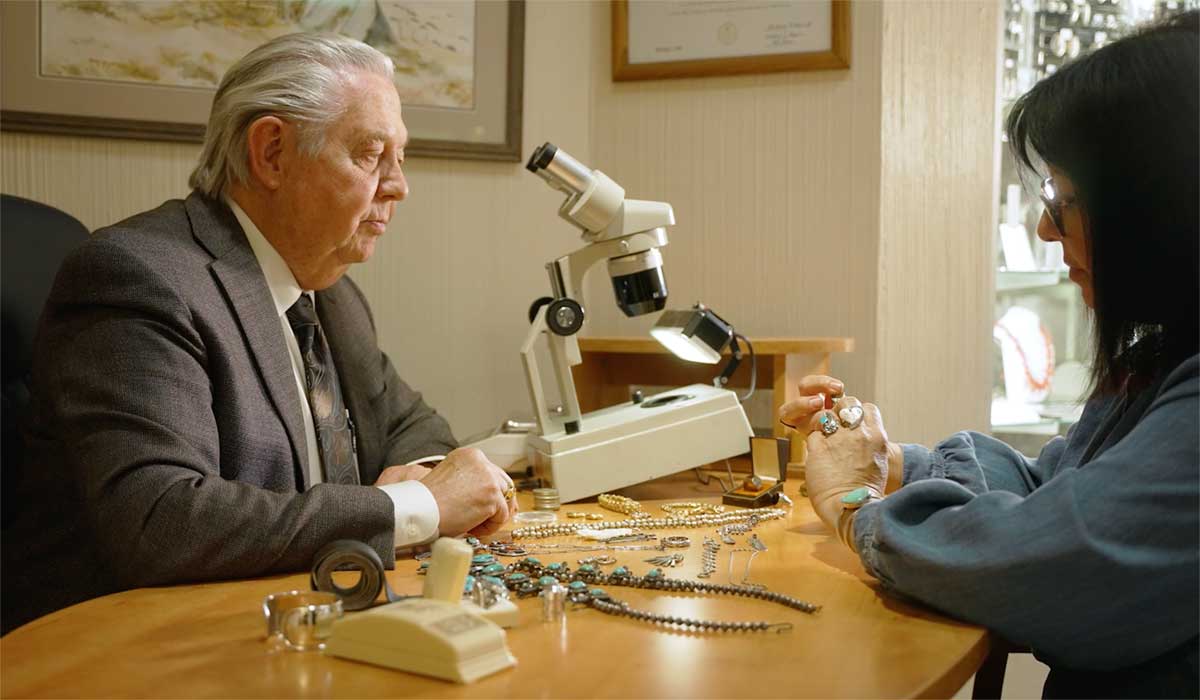
Keith Austin advises a client about her estate jewelry.
When you bring inherited jewelry to Austin’s Fine Jewelry at 230 E. Idaho Ave. in Las Cruces, Keith and his staff begin by categorizing each piece and confirming whether it’s fine jewelry or costume. They then review which items may merit an insurance or estate appraisal and which are suitable for resale or trade‑in.
When clients are inheriting or deciding what to sell, Keith describes a structured approach:
Bring the jewelry to Austin’s Fine Jewelry (230 E. Idaho Ave., Las Cruces). Pieces are evaluated and grouped (for example, costume vs. precious metals/gems), and gold can be tested for karat.
Get recommendations on what to keep, whether you need an insurance or estate appraisal, and how to think about equitable distribution and estate-related considerations.
Decide on disposition: understand scrap value and trade/resale options, consider other sales markets, or donate items when appropriate.
After evaluation, Keith can recommend the next steps that fit your goals. That may include determining scrap value, offering to purchase certain pieces, suggesting consignment or other markets, or recommending nonprofit organizations that accept jewelry donations as part of estate planning.
Takeaway: Fair distribution is easier when items are categorized and verified first. Then decisions are based on facts, not guesses.
When Should You Consider Getting a Professional Appraisal or Evaluation?
A professional appraisal is smart when you are unsure what you own, when you need insurance coverage, or when multiple heirs need a fair distribution. Formal estate jewelry appraisals document metal content, gemstone details, and an opinion of value at a specific date, which is helpful for legal and tax purposes.
Get a professional evaluation when:
You inherited jewelry and don’t know what it is
You need insurance coverage
You’re dividing items among heirs
You want to sell and need a defensible price
What to look for in an appraiser: training, experience with estate/vintage pieces, and clear documentation of what was examined and how the value was determined. Organizations like NAJA (National Association of Jewelry Appraisers) focus on appraisal expertise.
Consult a certified gemologist in Las Cruces who specializes in estate and vintage jewelry. Austin’s Fine Jewelry notes it offers insurance appraisals and estate appraisals, and can advise on which type you need. Keith holds gemologist certification through the Gemological Institute of America (GIA) and offers both estate and tax appraisals at Austin’s Fine Jewelry.
Prep tip: gently clean with a soft cloth so hallmarks are readable. Avoid aggressive polishing or soaking if you don’t know the stone type.
What Are Smart Strategies for Selling Estate Jewelry in Las Cruces or Online?
A smart first move is getting at least one professional opinion before you list or sell anything. A local jeweler who regularly handles estate pieces can explain current trends, show you the difference between scrap and collectible value, and help you avoid unrealistic expectations.
If you want a smoother sale (and fewer regrets), follow these practices:
Use reputable buyers and avoid “pressure pricing.”
Work with established jewelers or specialists rather than unverified buyers. If a deal feels rushed, it usually is.
Get more than one opinion.
For higher-value pieces, compare options (outright sale, trade-in credit, consignment, or specialty resale).
Bring documentation and be honest about the condition.
Disclose repairs and replacements. Trust improves offers.
Match the sales channel to the piece.
Scrap / low-demand: in-store assessment or bench check, and a scrap offer may be simplest
Brand / signed / rare: specialty resale or auction may pay more
Mid-range pieces: trade-in or resale planning through a trusted jeweler can be efficient
Seek multiple offers and then compare options. For higher‑value or unusual pieces, you might combine a local offer from Austin’s Fine Jewelry with consignment, auction, or specialized estate jewelry buyers, always using clear photos and accurate descriptions to support your asking price.
Takeaway: The “best” selling method depends on whether your value is driven more by metal weight or what collectors are currently paying.
What Mistakes Should You Avoid When Buying or Selling Estate Jewelry?
Common, expensive mistakes include:
Skipping verification of hallmarks and stones
Treating age as proof of value (it isn’t)
Taking the first offer without context
Polishing or repairing before you understand whether it changes the piece’s originality
Buying online without enough photos, return policies, or proof of authenticity
A common mistake is skipping a professional assessment. Without an appraisal or at least a qualified jeweler’s opinion, sellers risk accepting far less than a piece is worth, while buyers risk overpaying for costume or heavily repaired jewelry.
Other common pitfalls include failing to verify hallmarks, relying on a single offer, and failing to keep documentation or the original boxes. Paperwork and provenance can significantly improve resale value, especially for designer, Native American, or period pieces that collectors seek out in the Las Cruces and Southwestern market.
Takeaway: Your safest move is simple: verify first, decide second.
Next Steps: Get an Estate Jewelry Evaluation in Las Cruces
If you own estate or inherited jewelry and are unsure what to do with it, start by having everything carefully evaluated by an experienced jewelry team. A hands-on assessment at Austin’s Fine Jewelry can quickly clarify whether the piece is costume jewelry or fine jewelry, and which pieces may have significant collectible or sentimental value.
For residents of Las Cruces and the Mesilla Valley, Austin’s Fine Jewelry offers appraisals, repairs, trade‑ins, and a wide selection of new and estate pieces in one convenient location. Visit Austin’s Fine Jewelry at 230 E. Idaho Avenue in Las Cruces, visit its free Ring Museum, or visit the website to schedule an assessment of your estate jewelry.
For personalized help with estate jewelry in Las Cruces, from inherited collections to vintage Native American pieces, visit Austin’s Fine Jewelry or call their Las Cruces showroom, 575-525-3340, to schedule a straightforward, clearly explained assessment with gem expert Keith.
Frequently Asked Questions (FAQs)
What exactly does “estate jewelry” mean?
Estate jewelry means previously owned jewelry of any age. The term does not guarantee rarity or value; it only tells you the piece had a prior owner. A piece can be estate jewelry even if it’s only a few years old. Some estate pieces also qualify as vintage or antique, but those labels refer to age, whereas “estate” describes ownership history.
People most often use “estate jewelry” to describe items from inheritance, estate sales, and trade-ins. Pricing can vary widely between similar-looking pieces due to metal purity (karat), gemstone identity, and condition.
A smart first move is a hands-on assessment that confirms those facts before you decide to keep, redesign, trade, or sell. This helps you because two rings that look similar can be priced very differently depending on metal purity, gemstone identity, and condition.
If you’re unsure what you have, seek estate jewelry evaluation in Las Cruces. Keith Austin can confirm karat, stone type, and wear issues before you decide to keep, redesign, trade, or sell.
Is vintage jewelry always worth more than modern pieces?
No. Vintage jewelry can be valuable, but age alone doesn’t guarantee a higher price. Vintage jewelry is not automatically worth more than modern designs. Resale price is usually determined by metal content, gemstone quality, maker, condition, and current buyer interest, not the date on the calendar.
Vintage pieces often command higher prices when they feature strong craftsmanship, desirable period design, and quality stones in good condition. But some older items sell for little more than scrap if the setting is too worn or the style isn’t in demand.
Trends can shift the resale market. For example, buyers in the Southwest may prefer certain gold colors at different times, affecting what they are willing to pay.
A newer high‑quality diamond ring from a respected designer can be worth more than an older ring that’s worn or common. In Las Cruces, local experts like Austin’s Fine Jewelry see both underpriced vintage treasures and modern pieces that command strong resale prices because of craftsmanship and condition.
A good rule: Treat “vintage” as a clue to investigate, then confirm materials and condition before you estimate value.
How can I tell if an estate ring is real gold or platinum?
First, check inside the band for hallmarks such as 10K, 14K, 18K, and “PLAT” or “PT” for platinum. These marks indicate the metal’s purity and are standard on fine jewelry from reputable manufacturers.
Because marks can be worn down, missing, or misleading on reproductions, you should have a local jeweler test the metal. At Austin’s Fine Jewelry, Keith and his team routinely test gold to validate karat and confirm whether a ring is solid gold, gold‑filled, plated, or another metal, which directly affects value.
If the ring includes stones, also request stone identification. The setting and center stone are often what drive collector value.
Do I need a professional appraisal before selling or insuring estate jewelry?
If you believe a piece has significant value or if you are insuring your jewelry, a professional appraisal is strongly recommended. If you’re insuring, dividing an estate, or selling higher-value pieces, a professional appraisal is usually worth it.
An appraisal documents the jewelry’s characteristics and provides a written value opinion that insurers and estate professionals can use. Insurance appraisals are typically based on replacement value (what it would cost to replace the item in a comparable retail context).
For selling, an appraisal or in-store assessment helps you avoid two common problems: pricing too high (and never selling) or accepting too little because you didn’t know the materials, maker, or condition. On the estate side, Austin’s provides estate and tax-related appraisal services and guidance to help inform equitable distribution decisions.
For lower-value items or when you simply want a quick sense of worth, a verbal opinion from a qualified jeweler may be enough.
If you’re in Las Cruces, begin with an assessment to determine whether you’re dealing with scrap value, resale value, or a collectible piece. Austin’s Fine Jewelry offers both formal estate and tax appraisals and practical in‑store bench checks to help clients decide which pieces to keep, insure, or sell.
Where can I sell estate jewelry in Las Cruces?
Most people choose one of three routes:
A trusted local jeweler for evaluation and a clear set of options (sell, trade, redesign, or consign).
Specialty resale/auction for signed, rare, or high-end pieces.
Online marketplaces for lower-risk items where you can document details well.
Many residents prefer to start with an established jeweler in Las Cruces rather than anonymous online buyers or pawn shops. Austin’s Fine Jewelry has served the Mesilla Valley community since 1988 and is a well-known local resource for estate jewelry guidance, appraisals, and trade‑in conversations, especially for inherited or unworn items.
Where you sell should match what you have. If the value is primarily metal weight, a local scrap offer may be the simplest option. If the value is tied to design or maker demand, a channel that reaches collectors may pay more. After you get a baseline opinion, you can decide whether to sell directly, trade toward something new, or explore consignment or auction options.
What’s the difference between scrap value and collectible value?
Scrap value is the amount your jewelry is worth if it is melted down for its metal and any reusable stones. It is based primarily on the metal content (type and weight) and current metal and gemstone prices, without adding extra for design or history.
Collectible value includes design, brand, era, rarity, condition, and desirability among buyers. Well‑preserved antique or Native American pieces can sell for far more than scrap, which is why Austin’s Fine Jewelry and other experts always consider both intrinsic and collector value when evaluating estate jewelry.
To separate the two, you need:
confirmed materials
condition assessment
a realistic read on local and broader demand
Keith notes that trends can flip the equation: if buyers strongly prefer a different metal color or style than older pieces, some items may sell closer to scrap even if they’re well-made.
Should I clean or polish my estate jewelry before selling it?
A light, careful cleaning can ensure hallmarks and details are clearly visible during evaluation. But harsh polishing, chemical dips, or heavy buffing can damage stones and remove desirable patina, especially on vintage or Native American pieces.
If you’re considering repairs or restoration, get advice first. Some repairs improve wearability and presentation, while others reduce value by changing originality.
If you are unsure how to clean a piece safely, let a jeweler handle it. Austin’s Fine Jewelry repairs offers professional cleaning and repair services and can advise whether polishing will improve the appeal or risk harming the value of estate jewelry.
Best move: clean gently, then get an on-site jewelry check before you pay for polishing or repairs.
Can gemstones or settings be replaced without lowering resale value?
Sometimes, but it depends on the piece and the buyer. Replacing a missing side stone in a non-rare ring may improve wearability and help it sell. But changing an original setting, swapping stones, or altering period details can reduce collector interest, especially for high-end vintage or antique pieces. Collectors often prefer original stones and original settings.
Also, treatments and enhancements should be disclosed in the jewelry trade because they can affect value and durability expectations (GIA 4CS, 2014).
Replacing missing stones or rebuilding a damaged setting can restore wearability, but it may change how collectors view authenticity. If you’re unsure, ask a jeweler to explain the “before/after” impact on value. If the piece is primarily a wearable item, repairs matter. If the piece is a collectible, originality may matter more.
For everyday wear pieces or sentimental items, upgrades and repairs usually make sense. Austin’s Fine Jewelry regularly performs redesigns and repairs. Keith can explain when it is better to preserve originality for collectible value versus modernizing a piece for long‑term use.
How can I avoid buying a fake or poorly described estate piece?
Work with established, reputable sellers who stand behind what they sell. Trusted jewelers can provide clear descriptions of metal type, gemstone details, and whether a piece is handmade, Native American, designer, or mass‑produced.
Ask to see hallmarks, appraisals, and any supporting paperwork. If you’re buying online, look for multiple clear photos, a transparent return policy, and descriptions that match what you can verify (metal stamps, stone sizes, and condition notes).
Austin’s Fine Jewelry in Las Cruces is recognized for educating customers, showing stones under magnification, and answering questions so buyers understand exactly what they are purchasing.
What paperwork or documentation helps with resale or appraisals?
Helpful documentation includes prior appraisals, receipts, grading reports (especially for diamonds), brand/designer paperwork, and any repair records. Good paperwork helps an appraiser verify details and makes a resale listing more credible.
For diamonds, the 4Cs framework is the standard language buyers and sellers use to describe quality, and labs like GIA have long defined that framework.
Useful documents include original receipts, lab certificates such as GIA, prior appraisals, and any notes about the piece’s maker or family history. These materials help appraisers confirm details and can increase buyer confidence and final sale price.
If you don’t have documentation, a new appraisal from a qualified jeweler can fill the gap. Keith Austin offers written appraisals that include detailed descriptions, photos, and value conclusions, which are helpful for both insurance and future resale. A hands-on review with a reputable jeweler provides a clear baseline so you can decide whether to insure, sell, trade, or keep the piece.
We use cookies on our website to give you the most relevant experience by remembering your preferences and repeat visits. By clicking “Accept”, you consent to the use of ALL the cookies.
This website uses cookies to improve your experience while you navigate through the website. Out of these cookies, the cookies that are categorized as necessary are stored on your browser as they are essential for the working of basic functionalities of the website. We also use third-party cookies that help us analyze and understand how you use this website. These cookies will be stored in your browser only with your consent. You also have the option to opt-out of these cookies. But opting out of some of these cookies may have an effect on your browsing experience.
Necessary cookies are absolutely essential for the website to function properly. This category only includes cookies that ensures basic functionalities and security features of the website. These cookies do not store any personal information.
Any cookies that may not be particularly necessary for the website to function and is used specifically to collect user personal data via analytics, ads, other embedded contents are termed as non-necessary cookies. It is mandatory to procure user consent prior to running these cookies on your website.