Founded in 1849 by Lt. Delos Bennett, Las Cruces began as a planned settlement just one year after the United States acquired the region through the Treaty of Guadalupe Hidalgo. Its name, which translates to “the crosses,” is tied to an Apache-era legend and remains part of the city’s identity today.
Now home to roughly 114,000 residents, Las Cruces is the second-largest city in New Mexico and a regional center for agriculture, culture, and research. Businesses like Las Cruces Abstract & Title, founded in 1926 and still operating from a historic adobe building, reflect how the city’s past continues to shape daily life.
How Did Las Cruces Get Its Name?
Las Cruces is Spanish for “the crosses,” a name commonly linked to a local legend involving a deadly Apache attack near the future town site. According to oral accounts, survivors or mourners erected three wooden crosses to mark the location where victims were killed or buried. Over time, the image of these three crosses became associated with the area and its name. It’s not uncommon to see the three crosses symbol around town.
It’s worth noting that the story is based on oral tradition rather than definitive documentation. Even so, the three-cross legend reflects the region’s early dangers, cultural memory, and Spanish-language roots, which remain central to Las Cruces’ identity today.
When Was Las Cruces Founded?
The 1849 Town Layout
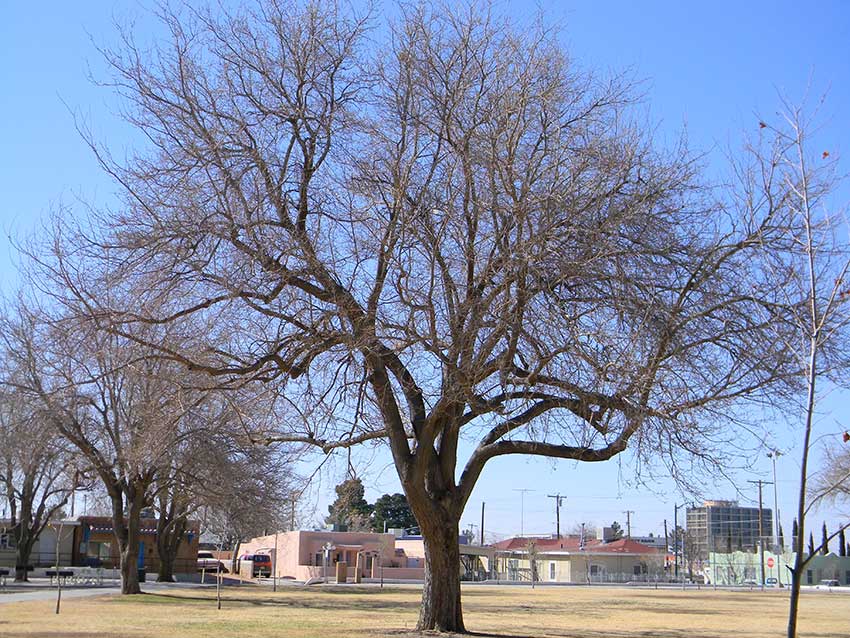
In 1849, Lt. Delos Bennett and five surveyors laid out the town site using rope and stakes. The original plan measured 13 blocks by six blocks, forming a compact grid south of the village of Doña Ana.
Under a cottonwood tree in what is now Klein Park, 120 families drew suertes, or lots, from a hat to claim land. This lottery-style distribution gave settlers an equal chance to establish homes in the new town.
Post-War Settlement Context
The founding of Las Cruces came just one year after the Treaty of Guadalupe Hidalgo was signed on February 2, 1848. The treaty ended the Mexican–American War and transferred large portions of the Southwest to the United States. Las Cruces emerged as one of the early American-planned settlements in this newly defined region.
What Role Did Agriculture Play in Las Cruces History?
Fabian Garcia and the Chile Pepper Legacy
Fabian Garcia, a member of the first graduating class of what is now New Mexico State University in 1894, became director of the agricultural experiment station. His research focused on helping farmers transition away from grain production.
Garcia is best known for developing improved chile pepper varieties, a contribution that shaped New Mexico’s agricultural identity. He also introduced Acala cotton and Grano sweet onions, both of which proved commercially successful.
Dust Bowl and Depression-Era Challenges
Despite its proximity to the Rio Grande, Las Cruces experienced drought conditions during the 1930s. These years brought Dust Bowl-like hardships that strained farms and families throughout the region.
The period tested the resilience of local agriculture and underscored the importance of irrigation systems, crop research, and institutional support already taking root in the Mesilla Valley.
What Are the Major Historic Buildings in Las Cruces?
The Otto Bombach House (1889)
Built in 1889, the Otto Bombach House was constructed from several thousand adobe bricks made on-site using clay hauled by wagon. Bombach lived there until he died in 1893, after which his widow, Hipolita, and daughter, Margarita, remained in the home.
In 1929, Margarita and her husband, Manuel Chavez, converted the structure into five efficiency apartments called Valencia Courts. In 2003, the building was renovated to serve as the offices of Las Cruces Abstract & Title, continuing its role as a working part of the city.
Rio Grande Theatre (1926)
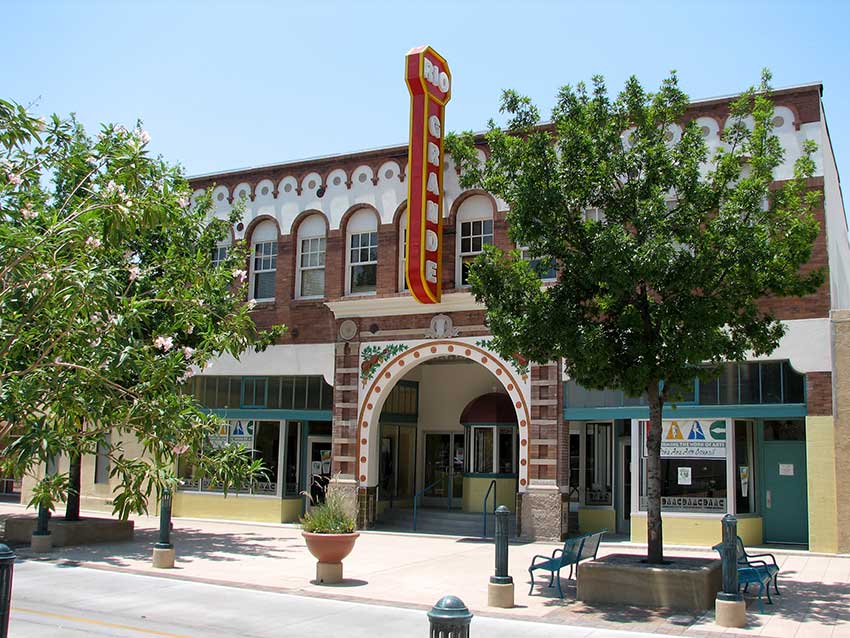
The Rio Grande Theatre opened on July 26, 1926, the same year Las Cruces Abstract & Title was founded. Its first screening was the silent film Mare Nostrum.
The theater became a cultural anchor during a period of economic growth, just three years before the stock market crash ushered in the Great Depression.
Branigan Memorial Library and Cultural Center
The Women’s Improvement Association, founded in 1894, helped establish Las Cruces’ first library in 1924. In 1935, Alice Branigan funded a new library in memory of her husband, Capt. Thomas Branigan.
It was the only privately funded library construction project in New Mexico during the Depression. The building served as the city library until 1979 and now houses the Branigan Cultural Center, which is listed on the National Register of Historic Places.
How Did Title Companies Develop in Las Cruces?
The first American title company, the Law Property Assurance and Trust Society, was formed in Pennsylvania in 1853. Its purpose was to confirm the authenticity and legality of real estate ownership, a growing need as the country expanded westward.
Las Cruces Abstract & Title was founded in 1926 to support evolving real estate needs and today provides title searches, title insurance, and real estate closing services for residential and commercial properties across Doña Ana, Hidalgo, and Luna counties. Operating for nearly a century from one of the city’s oldest adobe buildings, the company reflects the growth of Las Cruces and draws on long-standing local knowledge, careful research, and thorough documentation to complete accurate real estate transactions throughout Southern New Mexico.
What Is Las Cruces Known for Today?
Population and Regional Importance
With a population of approximately 114,000, Las Cruces is the second-largest city in New Mexico. It serves as the economic and cultural hub of the Mesilla Valley and much of Southern New Mexico.
The city supports education, healthcare, research, and commerce for a broad surrounding region.
White Sands Test Facility and Military Heritage
Nearby White Sands Test Facility and Missile Range plays a significant role in national defense and research. The northern part of the range was the site of the world’s first atomic bomb test on July 16, 1945.
Military and aerospace research remain significant employers and economic drivers for the region.
Multicultural Heritage and Tourism
Las Cruces reflects the influence of Native American, Hispanic, and Anglo-American peoples. Visitors are drawn to historic architecture, agricultural traditions, and nearby attractions, including White Sands National Park.
Cultural institutions such as the Branigan Cultural Center provide deeper insight into the city’s past.
Timeline of Key Las Cruces History Events
- 1848: Treaty of Guadalupe Hidalgo signed
- 1849: Las Cruces founded; 120 families draw lots
- 1889: Otto Bombach House constructed
- 1894: First NMSU graduating class; Women’s Improvement Association founded
- 1924: First Las Cruces library established
- 1926: Rio Grande Theatre opens; Las Cruces Abstract & Title founded
- 1929: Valencia Courts opens; stock market crash
- 1930s: Drought and Dust Bowl conditions
- 1935: Branigan Memorial Library funded
- 1945: First atomic bomb test near White Sands
- 1979: New library opens; Branigan building repurposed
- 2003: Bombach House renovated for LCAT
- 2025: Population reaches approximately 114,000
Connecting Las Cruces’ Past to Its Present
From its 1849 founding to its role as a modern regional center, Las Cruces has grown through planning, perseverance, and community investment. Historic buildings, agricultural research, and long-standing local institutions tell a story that continues to unfold.
Las Cruces Abstract & Title remains part of the city’s ongoing story, providing title searches, title insurance, and real estate closing services from one of Las Cruces’ oldest adobe buildings. Founded in 1926, the company has grown alongside the city and serves buyers, sellers, and lenders across southern New Mexico. Its Campo Street offices reflect a long-standing commitment to careful documentation, local expertise, and professional service that supports clear and confident real estate transactions.
FAQs About Las Cruces History
What does Las Cruces mean in English?
Las Cruces translates to “the crosses” in English. The name is commonly associated with a legend involving an Apache attack and memorial crosses erected for the victims.
The story has been passed down for generations, though historians note limited written documentation. Even so, the name reflects early regional conflict, Spanish-language influence, and how oral history shapes cultural identity in Southern New Mexico.
When did Las Cruces become part of the United States?
This area became part of the United States in 1848 following the Treaty of Guadalupe Hidalgo. The town itself was founded the following year.
The treaty ended the Mexican-American War and transferred vast southwestern territories to U.S. control. Las Cruces emerged as one of the first planned settlements in the newly acquired region.
Why is Las Cruces important to New Mexico chile production?
Las Cruces is closely tied to New Mexico chile production due to the work of Fabian Garcia at New Mexico State University. He developed improved chile varieties suited to the region.
Garcia’s research helped establish chile peppers as a defining agricultural product. His broader work in crop diversification also strengthened farming throughout the Mesilla Valley.
What happened to Las Cruces during the Great Depression?
The Great Depression brought economic hardship and drought to Las Cruces. Local agriculture faced Dust Bowl-like conditions despite access to the Rio Grande.
At the same time, civic investment continued. The privately funded Branigan Library, completed in 1935, stands as an example of community resilience during a difficult decade.
Where can I learn more about Las Cruces’ history?
Local history can be explored at the Branigan Cultural Center, NMSU Archives, and White Sands. Walking tours of historic neighborhoods are also available.
These resources provide access to documents, exhibits, and preserved buildings that illustrate the city’s development over time.
How has Las Cruces grown since it was founded?
Las Cruces grew from a settlement of 120 families into a city of roughly 114,000 residents. Growth was driven by agriculture, education, military research, and regional commerce.
Planned development, institutional stability, and geographic location all contributed to steady expansion over more than 175 years.
What is Klein Park’s significance in Las Cruces’ history?
Klein Park marks the site where the city’s original settlers drew lots for their land in 1849. The lottery system allowed equal access to property.
Today, the park serves as both a public space and a reminder of the city’s democratic beginnings.
What architectural style is the Otto Bombach House?
The Otto Bombach House is a traditional adobe structure built using locally sourced clay. Bricks were formed and dried on-site.
Adobe construction provides natural insulation and reflects regional building practices. The 2003 renovation preserved these features while adapting the structure for modern office use.
This Story Sponsored by LAS CRUCES ABSTRACT & TITLE

VISIT THE LAS CRUCES ABSTRACT & TITLE WEBSITE
Posted by LasCruces.com