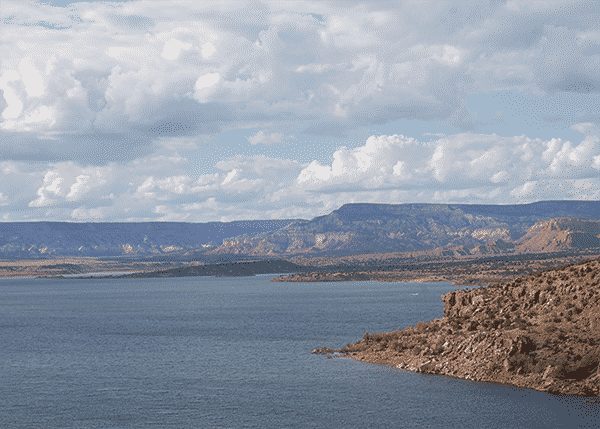
Southwest New Mexico State Parks offer some of the darkest and quietest night skies in the Southwest, especially at City of Rocks State Park, Leasburg Dam State Park, and Rockhound State Park. Volcanic rock formations, desert landscapes, and limited urban light create favorable conditions for viewing constellations, meteor showers, planets, and deep-space objects throughout the year.
Where Desert Skies Glow with Wonder
Southwest New Mexico State Parks provide access to dark skies that remain increasingly difficult to find across the United States. In parks surrounding Las Cruces, Deming, Columbus, and Faywood, dry desert air and wide-open landscapes create clear nighttime viewing conditions for astronomy, photography, and quiet observation.
The experience changes after sunset. Ancient volcanic formations become silhouettes against the stars, desert winds settle, and distant highways disappear into darkness. Places like City of Rocks State Park and Leasburg Dam State Park attract visitors specifically for nighttime recreation because the skies often reveal dense star fields, visible planets, meteor showers, and sections of the Milky Way that are difficult to see in urban environments.
According to the National Park Service, artificial light pollution continues to reduce access to naturally dark skies across North America. Southwest New Mexico remains one of the better locations in the region for public stargazing due to lower population density and large protected landscapes.
Best Southwest NM State Parks for Stargazing
City of Rocks State Park

Distance from Downtown Las Cruces: Approximately 115 miles northwest via I-10, US-180, and NM-61.
In short: City of Rocks State Park combines unusually dark skies with volcanic rock formations that create one of the most visually distinctive stargazing environments in New Mexico.
City of Rocks State Park features a “city” of ancient volcanic monoliths that provide a prehistoric backdrop for some of the clearest stargazing in the United States.
What makes the night sky mystical here?
The rock formations at City of Rocks State Park were created by a volcanic eruption roughly 30 million years ago. The towering columns rise abruptly from the desert floor, forming narrow pathways and natural viewing spaces that change character after sunset.
At night, the formations appear as dark silhouettes against dense star fields. Moonlight creates sharp shadows between the volcanic pillars, while the open desert horizon allows broad visibility in nearly every direction. During meteor showers, the lack of significant nearby development helps reduce competing light sources.
The International Dark-Sky Association notes that dry climates and low humidity improve astronomical visibility because moisture in the atmosphere can scatter artificial light. Southwestern New Mexico benefits from those conditions for much of the year.
What are the on-site astronomy facilities?
City of Rocks State Park regularly hosts Star Parties and astronomy programs that bring amateur astronomers and visitors together for public telescope viewing. Programs often include constellation identification, planetary observation, and guided discussions about seasonal celestial events.
The park also maintains a 14-inch Meade telescope that is used during organized astronomy events. Visitors may be able to observe planets, lunar craters, star clusters, and brighter deep-space objects, depending on weather and visibility.
Additional information about the park is available at City of Rocks State Park.
Read more: City of Rocks
Rockhound State Park

Distance from Downtown Las Cruces: Approximately 67 miles west via I-10.
In short: Rockhound State Park combines elevated desert terrain with astronomy programming that encourages visitors to observe both geological formations and the night sky.
Located on the slopes of the Little Florida Mountains, Rockhound State Park is a place of geological and celestial discovery where the earth and sky meet.
Can you stargaze while camping?
Rockhound State Park offers camping areas that give visitors direct access to nighttime skies without returning to nearby cities after dark. The park’s elevated location and relatively open terrain improve visibility for observing constellations and planets.
The park periodically hosts “Stars-n-Parks” programs led by local astronomers and astronomy organizations. These events often include guided telescope viewing sessions, educational presentations, and opportunities to ask questions about seasonal sky conditions. Visitors should contact the park directly at 575-546-6182 or check current schedules because event dates vary throughout the year.
Park office hours are typically 8 a.m. to 5 p.m.
The National Science Foundation’s NOIRLab identifies southern New Mexico as one of the best regions in the United States for astronomical observation because of its dry atmospheric conditions and relatively low light pollution outside major population centers.
Additional information is available at Rockhound State Park.
Pancho Villa State Park

Distance from Downtown Las Cruces: Approximately 92 miles south via I-10 and NM-11.
In short: Pancho Villa State Park offers quiet desert surroundings where historical structures and low nighttime traffic contribute to a calm stargazing atmosphere.
Pancho Villa State Park offers a quiet, border-town environment where the silence of the desert night highlights the history of the 1916 military camp.
What is the night atmosphere in Columbus?
The atmosphere at Pancho Villa State Park changes noticeably after dark. Columbus remains a small border community with limited commercial lighting compared to larger cities, allowing visitors to experience quieter nighttime conditions than many other populated areas in southern New Mexico.
Historic remnants of Camp Furlong create a distinct nighttime setting tied to the events of March 9, 1916, when Pancho Villa’s raid on Columbus led to a military response by the United States Army. After sunset, the desert landscape surrounding the historic site becomes exceptionally still, and the open skies over Luna County provide broad visibility for stargazing.
The New Mexico Historic Preservation Division recognizes Columbus and Camp Furlong as important historical resources connected to the Mexican Revolution and early twentieth-century military history.
Additional information is available at Pancho Villa State Park.
Mesilla Valley Bosque State Park

In short: Mesilla Valley Bosque State Park provides a quieter nighttime setting close to Las Cruces, particularly during organized evening walks and seasonal interpretive programs.
This riverside preserve offers a local escape, where the moon’s reflection on the Rio Grande creates a tranquil nighttime environment.
Distance from Downtown Las Cruces: Approximately six miles west via Picacho Avenue and Calle del Norte.
Is the park open for night observation?
Mesilla Valley Bosque State Park primarily operates as a day-use park, but seasonal evening programs and guided sunset walks occasionally extend visitor access into twilight hours. These programs sometimes transition into nighttime observation activities that focus on the Rio Grande corridor, nocturnal wildlife, and changing desert sky conditions.
The combination of water, cottonwood habitat, and open skies creates a calmer nighttime atmosphere than many urban parks in Las Cruces. Reflections from the Rio Grande and surrounding bosque vegetation can also improve conditions for low-light photography during moonlit evenings.
Visitors should confirm current schedules directly with New Mexico State Parks before planning nighttime visits because evening programming varies seasonally.
Additional information is available at Mesilla Valley Bosque State Park.
Read more: Mesilla Valley Bosque State Park
Leasburg Dam State Park

Distance from Downtown Las Cruces: Approximately 18 miles north via I-25.
In short: Leasburg Dam State Park is one of the most astronomy-focused state parks near Las Cruces due to its observatory partnership and regularly scheduled telescope programs.
Leasburg Dam State Park is the regional hub for professional-grade astronomy, featuring a dedicated observatory operated by the Astronomical Society of Las Cruces.
What can be seen through the observatory telescope?
The observatory at Leasburg Dam State Park includes a 16-inch telescope used during public astronomy events hosted in partnership with the Astronomical Society of Las Cruces. The equipment allows visitors to observe objects beyond what the naked eye can see.
Depending on the weather, moon phase, and seasonal visibility, visitors may be able to view nebulae, distant galaxies, star clusters, planets, and sections of the lunar surface with significant detail. During darker moon phases, deep-space viewing conditions improve because less ambient moonlight interferes with visibility.
According to the National Oceanic and Atmospheric Administration, dry desert climates often provide clearer atmospheric conditions for astronomical observation because reduced humidity reduces light scattering.
Additional information is available at Leasburg Dam State Park.
Read more: Leasburg Dam State Park Will Float Your Boat
Southwest New Mexico State Parks FAQ
When are the Star Programs at Leasburg Dam?
The public Star Programs at Leasburg Dam State Park typically take place on the Saturday closest to the third-quarter moon. Many programs operate between 8 and 10 p.m., though schedules may change due to weather, seasonal daylight conditions, or astronomy club availability. Programs are generally organized in partnership with the Astronomical Society of Las Cruces and may include telescope viewing, constellation tours, and presentations about planets or deep-space objects. Visitors should verify event dates with New Mexico State Parks before traveling, as cancellations occasionally occur during cloudy or windy conditions.
Is City of Rocks a certified Dark Sky Park?
City of Rocks State Park is widely recognized as an excellent dark-sky location because of its remote setting and limited nearby light pollution. The park is frequently used for astronomy programs, telescope events, and night photography due to the clarity of its skies and the visibility of the Milky Way during darker moon phases. Visitors can buy day-use passes or camping access directly through New Mexico State Parks. While City of Rocks State Park is known for dark-sky viewing conditions, travelers should verify any formal dark-sky certification status through the International Dark-Sky Association or New Mexico State Parks before making plans tied to specific astronomy events.
Are telescopes provided at Rockhound State Park?
Telescopes are often available during organized “Stars-n-Parks” programs at Rockhound State Park because local astronomers and astronomy groups frequently bring equipment for public viewing sessions. Availability depends on volunteer participation, weather conditions, and scheduled programming dates. During these events, visitors may have opportunities to observe planets, lunar features, and brighter deep-space objects while learning basic astronomy concepts from experienced volunteers. Outside organized programs, visitors should plan to bring their own binoculars or telescopes if they want dedicated viewing equipment for overnight camping or independent stargazing.
Can I camp overnight for stargazing at Mesilla Valley Bosque?
Mesilla Valley Bosque State Park is primarily a day-use park and does not serve as a traditional overnight camping destination, unlike some larger New Mexico State Parks. Evening programs and sunset activities occasionally extend access beyond standard daytime hours, but overnight camping accommodations are unavailable within the park itself. Visitors interested in extended nighttime stargazing near Las Cruces should contact Mesilla Valley Bosque State Park directly at 575-523-4398 for current program schedules and operating information. Travelers who want overnight access to dark skies may prefer nearby camping locations such as Leasburg Dam State Park or Aguirre Spring Campground.
What should I bring for a night of stargazing?
Visitors planning a stargazing trip in southwest New Mexico should bring red-light flashlights, warm layers, water, folding chairs, and binoculars or telescopes if available. Red-light flashlights help preserve night vision because bright white light can temporarily reduce the eye’s ability to see dim stars and celestial objects. Desert temperatures may change quickly after sunset, especially in spring, fall, and winter, with nighttime temperatures sometimes dropping 20 to 30 degrees below daytime highs. Visitors should also bring printed maps or downloaded directions, as cell service can be inconsistent in remote areas of New Mexico State Parks.
New Mexico State Parks continues to provide access to some of the Southwest’s quieter and darker public landscapes. City of Rocks State Park, Leasburg Dam State Park, Rockhound State Park, Pancho Villa State Park, and Mesilla Valley Bosque State Park each offer a different perspective on the night sky and the desert environment surrounding Las Cruces.
Images courtesy of New Mexico State Parks
Featured image: City of Rocks State Park
Posted by LasCruces.com